
All Viruses articles – Page 29
-
 News
NewsA single gene underlies begomovirus resistance in eggplant
Researchers identified a gene in eggplant (Solanum melongena) that provides resistance to begomovirus infection. The work reveals a previously unknown defense mechanism and highlights clear biological differences between virus-resistant and virus-susceptible plants.
-
 News
NewsStudy: How can we stop the spread of flu?
Researchers wanted to find out how the flu spreads, so they put college students already sick with the flu into a hotel room with healthy middle-aged adult volunteers. The result? No one caught the flu.
-
 News
NewsUshikuvirus: A newly discovered giant virus may offer clues to the origin of life
Researchers have reported the discovery of a giant DNA virus that infects amoeba. Named ushikuvirus after Lake Ushiku in the Ibaraki Prefecture of Japan, where it was isolated. This discovery offers further support for the nuclear virus origin hypothesis.
-
 News
NewsBeyond gene scissors: New CRISPR mechanism discovered
Two studies describe how researchers found a novel CRISPR mechanism, Cas12a2, in a family of nucleases that exclusively cleave DNA. In contrast, Cas12a2 was able to broadly cleave both RNA and DNA.
-
 News
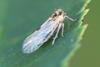
NewsNew study uncovers how rice viruses manipulate plant defenses to protect insect vectors
Rather than passively “hitchhiking” within insect vectors, rice viruses actively manipulate plant defense pathways to protect their insect carriers.
-
 News
NewsViruses in wastewater: Silent drivers of pollution removal and antibiotic resistance
New findings suggest that current monitoring strategies, which rely heavily on bacterial indicators alone, may miss critical viral-driven risks and opportunities for safer wastewater reuse.
-
 News
NewsInternational experts connect infections and aging through cellular senescence
Researchers propose the concept of infection-driven senescence (IDS) to describe the phenomenon in which microbial agents, beyond viruses, can trigger cellular senescence in host cells.
-
 News
NewsBats identified as origin of unexplained acute respiratory illness and encephalitis in Bangladesh
Infectious disease researchers have identified Pteropine orthoreovirus (PRV), an emerging bat-borne orthoreovirus, in archived throat swab samples and virus cultures from five patients in Bangladesh who were initially suspected to have Nipah virus infection but tested negative.
-
 News
NewsStudy reveals low immunity against H3N2 strain in Hong Kong; early vaccination urged
Flu activity has surged in many parts of the Northern Hemisphere, driven primarily by a newly emerged H3N2 strain known as ‘subclade K’. Researchers have found that most hospital patients in Hong Kong have little to undetectable levels of neutralising antibodies against this mutated strain.
-
 News
NewsUrban wild bees act as “microbial sensors” of city health
A new study shows that the guts of urban-dwelling wild bees contain detailed microbial signatures that reflect both bee health and the quality of the surrounding environment, offering a powerful new tool for monitoring ecological well-being in cities.
-
 News
NewsBacteria resisting viral infection can still sink carbon to ocean floor
Researchers exploring the mechanisms of phage resistance and its effects on the ecological jobs done by ocean bacteria found that some of the mutations studied don’t interfere with the bacteria’s ability to carry out their job of capturing and sinking carbon to the ocean floor.
-
 News
NewsResearchers develop novel composite copper oxides with strong and stable antiviral activity
Composite copper–lanthanum and copper–yttrium oxides developed by researchers from Japan demonstrate exceptionally high antiviral activity against non-enveloped virus. These oxides are highly stable and achieve over 99.999% viral inactivation in laboratory tests.
-
 News
NewsFiltering the invisible: New evidence points to more efficient indoor air microbe sampling
Using fluorescence-based detection, a new study provides clear, quantitative evidence that sampling principle, collection medium, and airflow rate strongly shape how well indoor microbial aerosols can be measured.
-
 News
NewsResearch reveals how ancient viral DNA shapes early embryonic development
New research focuses on a viral transposable element called MERVL. This element becomes highly active for a short window of time when a mouse embryo reaches the 2-cell stage – the point at which a fertilised egg has divided into two cells and switches on its own genome for the first time.
-
 News
NewsBeing infected or vaccinated first influences COVID-19 immunity
A new study analysing the immune response to COVID-19 sheds light on an important question: does it matter whether a person was first infected or first vaccinated? According to the results, the order of the events does alter the outcome.
-
 News
NewsGeneral intelligence framework to predict virus adaptation based on a genome language model
Researchers have developed a viral risk prediction framework named GIVAL based on the pre-trained viral protein language model vBERT.
-
 News
NewsCytomegalovirus breakthrough could lead to new treatments
Researchers have developed a new type of antibody with a modified structure that can outsmart cytomegalovirus and neutralize its ability to evade the immune system.
-
 News
NewsThe COVID-19 virus manipulates host cell RNA to shut down the immune system
Researchers have discovered that SARS-CoV-2 uses a sophisticated tactic to evade the human body’s defense system. In addition to evading the immune system before invading the host cell, SARS-CoV-2 manipulates the host cell’s genetic material in a way never before seen in other pathogens.
-
 News
NewsReal-world data gives Africa a smarter path to fighting HIV and TB
African biostatisticians have offered a powerful, data-driven alternative that can accurately inform HIV policy, reduce healthcare costs, and save more lives.
-
 News
NewsScientists reveal how excess hydrogen triggers metabolic shifts and viral defense in syngas microbiomes
Syngas biomethanation—converting CO/CO₂/H₂ into renewable methane—relies on coordinated microbial interactions. A study reveals that excess hydrogen disrupts this balance, reducing methanogenesis efficiency and triggering major shifts in microbial metabolism and viral dynamics.