
All University of East Anglia articles
-
 News
NewsWhen parasites stop having sex, they may become less picky about their hosts
A new evolutionary theory suggests that some asexual parasites may temporarily be able to infect a wider range of hosts as harmful genetic mutations build up.
-
 News
NewsQuiet emergence of superbug threat revealed in new study
Decades-old hospital samples have helped researchers uncover how a deadly antibiotic-resistant “superbug” quietly tightened its grip across the globe.
-
 News
NewsPioneering research sheds new light on what shaped extinction pattern of prehistoric marine life – and size clearly mattered
Scientists have shown conclusively for the first time that tiny marine organisms in polar oceans survived the mass extinction event that wiped out prehistoric dinosaurs because they needed less energy and were more tolerant to darkness.
-
 News
NewsScientists discover ‘hidden switch’ in immune cells that helps the body kill deadly fungus
Scientists have discovered a “control switch” inside our immune cells that helps the body destroy dangerous fungal infections. A protein called RAB5c helps white blood cells kill Aspergillus fumigatus – an airborne fungus that can cause life‑threatening lung infections in people with weakened immune systems.
-
 News
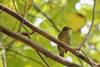
NewsCould your housemates be changing your gut bacteria?
Living with friends may quietly be altering your gut bacteria - according to a new study. Research on a colony of tiny island birds reveals they share more of their gut bacteria with the birds they spend the most time with.
-
 News
NewsSimple blood test for gut bacteria metabolites could spot dementia years earlier
Scientists have discovered that subtle changes in the blood may reveal the earliest signs of cognitive decline long before symptoms become obvious.These changes are caused by chemicals produced by gut bacteria - reinforcing the idea that the gut–brain connection plays an important role in early memory changes.
-
 News
NewsIsland birds reveal surprising link between immunity and gut bacteria
Scientists have uncovered a hidden link between gut health and the immune system, all thanks to a tiny island bird. They collected the poo of the Seychelles warbler to analyse their gut bacteria – and found that their immune genes influence which gut microbes thrive.
-
 Careers
Summer studentship: Owen investigates how fungal hyphae interact with lung cells
Owen Nicholson reports back on his AMI-sponsored summer studentship which investigated the role of Piezo1 in the immune response during fungal invasion of the human lung at the University of East Anglia.
-
 News
NewsMajor report tackles Covid’s cardiovascular crisis head-on
Regular Covid vaccinations should continue worldwide to reduce cardiac risks associated with the virus - according to new research.
-
 News
NewsDNA analysis shows colorectal cancer has unique microbial fingerprint
Colorectal cancer is unique in having its own microbial ‘fingerprint’ – according to new research that could help doctors better understand how this cancer develops, how aggressive it might be, and even how a patient might respond to treatment.
-
 News
NewsResearch to tackle Prymnesium algal blooms which affect fish populations
A scientific initiative to combat harmful Prymnesium algal blooms in the Broads is gaining fresh momentum, thanks to a renewed collaboration.
-
 Careers
Making connections: the story behind the Centre for Microbial Interactions
This year saw the launch of the Centre for Microbial Interactions, representing one of the world’s largest concentrations of microbiologists on a single site at Norwich Research Park. Project manager Dr Sam Rowe reveals the journey to this point.
-
 News
NewsOceans emit sulfur and cool the climate more than previously thought
Researchers have quantified for the first time the global emissions of a sulfur gas produced by plankton, revealing it cools the climate more than previously thought, especially over the Southern Ocean.
-
 News
NewsWild birds’ health and likely survival is affected by the gut microbiome
Researchers have found that the gut microbiome affects the health of wild birds, which could impact their survival rates and ultimately population sizes.
-
 News
NewsCentre for Microbial Interactions at Norwich Research Park is launched
The Centre for Microbial Interactions at Norwich Research Park is launched to promote and support ground-breaking research by one of world’s largest communities of microbiologists, with more than 100 microbiology research groups on one site.
-
 News
NewsNew method for protection from plant pathogens could help support global food security.
By modifying a plant intracellular immune receptor (NLR), researchers have developed a potential new strategy for resistance to rice blast disease, one of the most important diseases threatening global food security. The collaborative team from the UK and Japan have recently published their research in PNAS. This could have implications ...
-
 News
NewsNew discovery reveals unexpected ocean algae help cool the Earth
A common type of ocean algae plays a significant role in producing a massively abundant compound that helps cool the Earth’s climate, new research has discovered.
-
 News
NewsAntibiotic pollution disrupts the gut microbiome and blocks memory in aquatic snails
Antibiotics prevent snails from forming new memories by disrupting their gut microbiome, a new study reveals, highlighting the damaging effects that human pollution could be having on aquatic wildlife.
-
 Careers
Remote yet tight-knit: how my internship with AMI changed my outlook
Third year PhD student Chuen Lee spent 12 weeks interning with AMI’s Communications and Marketing Team - here’s how it went.
-
 News
NewsWearing face masks did not reduce risk of COVID infection after first Omicron wave, research shows
A study has found that wearing face masks did not lower the risk of Covid infection following the initial surge of the Omicron variant. Overseas travel was not associated with increased risk prior to February 2022, but then became a significant risk.