
All Sungkyunkwan University articles
-
 News
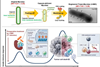
NewsBacterial nanoplatform targets spleen to reprogram immune cells and prevent cancer recurrence
Researchers have announced the development of an engineered nanoplatform named t-SMC, which precisely targets the spleen to reverse splenic myelopoiesis toward an antitumoral immune phenotype.
-
 News
NewsResearchers develop experimentally validated AI model to predict the virulence of tomato yellow leaf curl virus
A research team has developed DeepTYLCV, an accurate and interpretable artificial intelligence model for predicting the virulence of Tomato Yellow Leaf Curl Virus (TYLCV). DeepTYLCV uses viral genome-derived sequence information, enabling the model to identify mild and severe strains before symptom-based confirmation.
-
 News
NewsScientists engineer quantum-enabled proteins, opening a new frontier in biotechnology
A new study reports the creation of a new class of biomolecules, magneto-sensitive fluorescent proteins, that can interact with magnetic fields and radio waves. This is enabled by quantum mechanical interactions within the protein, and occur when it is exposed to light of an appropriate wavelength.
-
 News
NewsNew study links gut microbes to common heart disease - suggesting ‘Jekyll and Hyde’ action
Researchers studying gut microbes recently identified 15 bacterial species associated with coronary artery disease. The analysis reveals multiple pathways linked to disease severity, including increased inflammation and metabolic imbalance.
-
 News
NewsOral bacteria linked to Parkinson’s via the gut-brain axis
Researchers have identified the mechanism by which metabolites produced by oral bacteria in the gut may trigger the development of Parkinson’s disease.
-
 News
NewsStudy reveals the hidden genomic evolution of brown algae - and how bacteria and viruses helped
A groundbreaking study has unveiled the evolutionary journey of brown algae through a comprehensive genomic analysis of 44 species, including key evolutionary milestones, such as the transition from unicellular to multicellular forms.
-
 News
NewsFish gut microbes might play a role in future skin care products
Researchers have found molecules from fish gut bacteria that can inhibit tyrosinase and collagenase enzymes in lab-grown mouse cells, making them promising anti-wrinkle and skin-brightening agents for future cosmetic products.
-
 News
NewsHuman immune system evolves in the post-Omicron era
New research suggests that human immune responses are changing in order to combat the never-ending emergence of new SARS-CoV-2 variants.