
All rhizosphere articles
-
 News
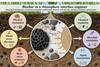
NewsBiochar can act as an ‘interface engineer’ to reshape the hidden world around plant roots
A new review shows how biochar simultaneously modifies soil structure, chemistry and microbial communities in the rhizosphere, offering a framework for more precise and sustainable agricultural use.
-
 News
NewsBurying crop residues deeper could help protect maize from ear rot and mycotoxins
A new study has found that incorporating maize straw deeper into the soil can substantially reduce maize ear rot and harmful mycotoxin contamination while creating a healthier soil environment.
-
 News
NewsNative microbial team helps acidic soil recover while boosting crop growth
Researchers have developed a small, carefully selected community of native soil bacteria that can reduce acid stress while helping plants access essential nutrients.
-
 News
NewsBarley discovery reveals nitrogen cycling pathway that could offer a nature-based solution to fertilizer loss
A new study reveals the presence of a nitrogen cycling pathway in barley that could prove valuable in cutting fertilizer requirements as the cost to farmers rises.
-
 News
NewsUnder the Lens: Plant microbiomes could cut agriculture’s dependence on chemicals, says Davide Bulgarelli
Understanding the hidden microbial communities that surround plant roots could pave the way for more sustainable farming, according to award-winning plant microbiologist Dr Davide Bulgarelli in conversation with Professor Emmanuel Adukwu.
-
 Video
VideoThe Microbiologist: Under the Lens | Episode 4
The microscopic organisms living around plant roots may hold the key to reducing agriculture’s reliance on chemical fertilisers and other non-renewable inputs, according to plant microbiome researcher Dr Davide Bulgarelli.
-
 News
NewsBiochar and Bacillus team up to help greenhouse cherry tomatoes grow more fruit
A new study shows that pairing biochar with beneficial Bacillus bacteria can unlock soil phosphorus, improve root growth, and increase cherry tomato yield by 23.53% under greenhouse cultivation.
-
 News
NewsIs organic farming the solution to enhance natural drought resilience in crops?
New research confirms that soils treated organically for decades favor the increase of bacteria, especially the genus Bacillus, which are characterized by being highly resilient to survive in extreme conditions and act as a ‘protective shield’ of plants.
-
 News
NewsSpraying leaves with carbon dots boosts rice yield and blocks toxic cadmium
In a full-season field test, a nanoscale spray activated a two-part defense system in rice, slashing grain cadmium content by nearly 50% while improving the harvest.
-
 News
NewsHow soil bacteria help plants defend themselves against disease
A study reveals the mechanism by which surfactin, a molecule produced by beneficial soil bacteria, activates plants’ immune defences. This mechanism, distinct from the classical paradigm of immune recognition, relies on direct interaction with the plant cell membrane.
-
 News
NewsDrip-irrigated halotolerant PGPB boost jujube yield and quality in saline soils by reshaping soil bacterial communities
A new study demonstrates that applying halotolerant plant growth-promoting bacteria (PGPB) via drip irrigation during the crop growth period can effectively alleviate soil salinity stress, enhance jujube productivity and fruit quality, and restructure rhizosphere bacterial communities in saline agricultural soils.
-
 News
NewsSelenium nanoparticles and glutathione synergistically enhance soybean salt tolerance by activating the JA pathway and arbutin-mediated rhizosphere microbiota
Researchers addressing soil salinity have developed a novel nano-biostimulant, a synergistic composite offering a new paradigm for enhancing salt tolerance by coordinating the plant’s endogenous signaling pathways with the functions of its rhizosphere microbial community.
-
 News
NewsNitrous oxide, a product of fertilizer use, may harm some soil bacteria
While some nitrous oxide is produced naturally at the plant root, agricultural practices can increase its levels. While it has long been believed that nitrous oxide doesn’t meaningfully interact with living organisms, a new paper shows that it may in fact shape microbial communities.
-
 News
NewsBiodegradable mulch isn’t disappearing as expected, new study warns
Scientists investigated how soybean roots influence the degradation of PBAT microplastics in soil. They tracked both polymer loss and monomer accumulation over a full 70-day plant growth cycle, revealing size-dependent and condition-specific rhizosphere effects.
-
 News
NewsGenes from corn’s wild ancestor change soil microbial community, improve sustainability
Corn bred with genes from wild relatives can reshape soil microbial communities and reduce nitrogen loss — with no yield reduction, according to new research. It’s the first time corn’s genetic makeup has been linked with inhibition of nitrifying and denitrifying bacteria.
-
 News
NewsRice genes matter more than domestication in shaping plant microbiomes
A new study reveals that the specific genetic identity of a rice plant plays a stronger role than whether it is wild or domesticated in determining which microbes it hosts and how those microbes function.
-
 News
NewsA new study reveals the microbial biodiversity of dehesa soil
A study reveals the underground interactions between fungi and oomycetes in twenty Andalusian dehesas, wooded pasturelands typical of the Iberian Peninsula, making it possible to identify the role of water as the main driver of microorganism diversity and to shed new light on the pathogen responsible for la seca.
-
 News
NewsCan a synthetic compound help plants recruit beneficial bacteria?
Researchers examining how a DMA analog called proline-2’-deoxymugineic acid (PDMA) influences the rhizosphere microbiome of peanut plants found that PDMA increased the abundance of beneficial microbes, particularly those within the phylum Actinobacteria.
-
 News
NewsNovel technique reveals insights into soil microbe alarm clock
A new study yields clues about when dormant microscopic bacteria and fungi in soil ‘wake up’ and colonize roots, which influences plant growth and health.
-
 News
NewsRoot chemistry determines how antibiotic resistance spreads from manure to crops
Researchers found that the rhizosphere, the narrow soil zone surrounding plant roots, is a major hotspot for the accumulation of manure-derived ARGs. Across eight common crops, ARG abundance in rhizosphere soil was on average 1.24 times higher than in bulk soil.