
All Pharmaceutical Microbiology articles – Page 10
-
 News
NewsStudy finds natural fungal supplement improves COVID-19 vaccine response
Researchers have found that a natural fungal supplement taken at the time of COVID-19 vaccination reduced short-term vaccine side effects and helped antibodies last longer in people who had not previously been exposed to the virus.
-
 News
NewsChemically ‘stapled’ peptides used to target difficult-to-treat cancers
Researchers have developed a new technology that uses bacteria to build, chemically stabilise, and test millions of potential drug molecules inside living cells. The bacteria produce vast libraries of peptide molecules, and chemically stabilise them into defined shapes while they are being tested inside the cell.
-
 News
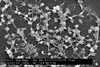
NewsUltrasound-activated ‘nanoagents’ kill superbugs hiding in biofilms
Scientists have designed nanoagents that act like smart drug‑delivery capsules – carrying an antibiotic deep into bacterial infection sites and releasing it only when activated by gentle ultrasound.
-
 News
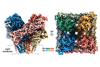
NewsImaging technique is step towards needed treatments for hantaviruses in new molecular ma
Researchers have produced a detailed blueprint, the highest resolution yet, for a protein complex the Andes virus uses to infect host cells. The new detailed structural information enabled the researchers to produce a vaccine candidate that caused mice to produce neutralizing antibodies against the Andes virus.
-
 News
NewsAcoziborole Winthrop receives European Medicines Agency positive opinion as three-tablet, single-dose treatment for most common form of sleeping sickness
The European Medicines Agency has granted a positive opinion to Acoziborole Winthrop (acoziborole) as a single-dose oral treatment for both early- and advanced-stage gambiense sleeping sickness in adults as well as in adolescents 12 years and older weighing at least 40 kilograms.
-
 News
NewsScientists identify key protein that stops malaria parasite growth
An international team of scientists have identified a unique protein essential for the malaria parasite’s survival and transmission. Aurora-related kinase 1 (ARK1) acts as a ‘traffic controller’ during the parasite’s unusual cell division and growth process.
-
 News
NewsScientists uncover mechanism used by three bacteria-killing viruses to target transporter
Biochemists have homed in on an underexplored small transporter called MurJ that is a vital part of the pathway bacteria use to build their chain-mail-like cell wall. Using advanced tools, the scientists have determined the common mechanism used by three different bacteria-killing viruses to block MurJ from doing its job.
-
 News
NewsScientists identify endangered natural pharmacy hidden in coral reefs
The magnitude of the potential loss of the “natural pharmacy” found in the coral microbiome is demonstrated by a new study which identified new microbial species in corals which have the ability to produce novel substances.
-
 News
NewsEmerging class of antibiotics to tackle global tuberculosis crisis
Researchers investigated how three naturally occurring antibiotic compounds – ecumicin, ilamycin and cyclomarin – act on a vital protein degradation machine inside Mycobacterium tuberculosis, the bacterium that causes TB.
-
 News
NewsSingle daily pill shows promise as replacement for complex, multi-tablet HIV treatment regimens
A phase 3 clinical trial has shown that a new, daily oral tablet that combines two current HIV treatment medications – bictegravir and lenacapavir (BIC/LEN) – may simplify treatment significantly for people with HIV who currently take very complex treatments.
-
 News
NewsStudying yeast in the gut could lead to new, better drugs
A new study sheds light on the behavior of yeast cells in the gut, paving the way for new lines of yeast that more efficiently produce therapeutic drugs tailored to address specific diseases.
-
 News
NewsNew strategies aim at HIV’s last strongholds
A new study has overcome a long-standing challenge—how to isolate and study elusive HIV-infected cells called authentic reservoir clones (ARCs) that evade the immune system, making the disease difficult to cure.
-
 News
News Huayunuo approval positions China at forefront of viral hepatitis innovation, says GlobalData
Huahui Health has recently secured conditional approval from China for Huayunuo (Libevitug Injection), marking it as the first domestically developed monoclonal antibody (mAb) drug for chronic hepatitis D virus (HDV) infection in adults with or without compensated cirrhosis.
-
 News
NewsNew insights into how bacteria control DNA synthesis open the door to next generation antimicrobials
A new study combines structural biology, biophysical characterisation and functional assays to delineate how the bacterial transcriptional regulator NrdR’s quaternary structure responds to different nucleotide states and how these changes affect its regulatory activity.
-
 News
NewsInvasive death cap mushrooms are changing their chemistry
Scientists have just published new research about the chemistry of death cap mushrooms (Amanita phalloides) - the species is not only spreading rapidly as an invasive fungal species in the United States, but the move across continents has changed the chemistry of the species.
-
 News
NewsNew antibody–drug conjugate strategy to block HIV infection
New antibody–drug conjugates (ADCs) combine a CD4 mimic with neutralizing antibodies for enhanced suppression of HIV infection. By targeting the gp120 on the viral envelope via a two-step mechanism, the ADCs effectively block viral entry.
-
 News
NewsA yeast enzyme helps human cells overcome mitochondrial defects
An international team has experimentally uncoupled nucleotide synthesis from mitochondrial activity using ScURA, a yeast-derived genetic tool now available to the research community that will enable new explorations of cellular metabolism.
-
 News
NewsRhododendron-derived drugs now made by bacteria
Bioengineered E. coli bacteria can now produce a group of compounds with anticancer, anti-HIV, antidiabetic and anti-inflammatory activities. The compounds, orsellinic acid-derived meroterpenoids, are produced by Rhododendron species.
-
 News
NewsImmunity against common virus leveraged against pancreatic cancer
Researchers have discovered a promising new treatment approach for pancreatic cancer. The approach leverages the body’s natural immune response to cytomegalovirus (CMV), a common but typically harmless virus that most people are infected with at some point in their lives.
-
 News
NewsHIV antibody opens up new approaches for vaccine development and combination therapies
An international research team has identified a novel HIV antibody that targets the virus at a particularly vulnerable site and overcomes previous limitations of known antibodies. The study opens up new perspectives for the development of vaccines and therapeutics against HIV-1.