
All Parasites articles – Page 3
-
 News
NewsNasal spray could transform treatment of deadly cerebral malaria
Master’s student Taznita Kista is exploring whether a nano-enabled nasal spray could change how cerebral malaria is treated. Her work focuses on a nose-to-brain drug delivery system using niosomes.
-
 News
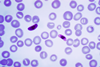
NewsResearchers combine polarized light and a magnetic field to spot malaria under the microscope
Researchers have developed a new microscopy method that uses a magnetic field and polarized light to provide quantitative measurements that could enable faster and more objective detection of malaria in blood.
-
 News
NewsSevere childhood malaria linked to cognitive impairment later in life
New findings suggest children who survive cases of cerebral malaria and severe malarial anemia experience cognitive and academic impairment that persists into adolescence.
-
 News
NewsGene sheds light on how parasites exit host cells
Researchers have elucidated the parasite exit process - known as egress - after identifying an essential gene, MIC11. To clearly explain egress, the behaviors of Toxoplasma gondii were assessed.
-
 News
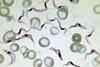
NewsScientists solve 40-year-old biological mystery behind sleeping sickness
Scientists have cracked a 40-year-old biological cold case by revealing how the parasite that causes sleeping sickness stays one step ahead of the human immune system.
-
 News
NewsFirst Chagas disease conference on US soil highlights a turning point in national awareness
For the first time, a conference dedicated to Chagas disease research will be held on U.S. soil, marking a significant and symbolic moment for researchers, clinicians and public health leaders working to boost awareness of the disease in this country.
-
 News
NewsFluorescent imaging reveals how a global parasite develops, opening new paths for drug treatment
Researchers adapted a fluorescent imaging system typically used to study human cells, enabling real-time observation the parasite’s growth, a promising breakthrough against an organism that that infects both humans and animals.
-
 News
NewsStudy reveals immune blueprint for next-generation malaria vaccine
New research has uncovered how the human immune system fights Plasmodium vivax, paving the way for the first effective vaccine against the most widespread form of malaria. It provides critical evidence of how protective immunity to P. vivax works, identifying specific targets on the parasite.
-
 News
NewsA highly precise target for medications against tropical diseases
Researchers have discovered a critical vulnerability shared by the pathogens that cause African sleeping sickness, Chagas disease and leishmaniasis. The PEX38 protein plays a crucial role in the formation of certain organelles of the trypanosomes that are essential for their energy supply.
-
 News
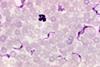
NewsAcoziborole Winthrop receives European Medicines Agency positive opinion as three-tablet, single-dose treatment for most common form of sleeping sickness
The European Medicines Agency has granted a positive opinion to Acoziborole Winthrop (acoziborole) as a single-dose oral treatment for both early- and advanced-stage gambiense sleeping sickness in adults as well as in adolescents 12 years and older weighing at least 40 kilograms.
-
 News
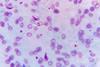
NewsScientists identify key protein that stops malaria parasite growth
An international team of scientists have identified a unique protein essential for the malaria parasite’s survival and transmission. Aurora-related kinase 1 (ARK1) acts as a ‘traffic controller’ during the parasite’s unusual cell division and growth process.
-
 News
NewsA parasitic origin for the ribosome?
Scientists propose that the ribosome first emerged from a proto-ribosome, likely a viral parasite, which began by taking advantage of proto-cells, and ended up being incorporated into cells, at some time before the last universal common ancestor.
-
 News
NewsThe hidden infections that refuse to go away: how household practices can stop deadly diseases
A 13-year study reveals why a deadly parasitic infection targeted for elimination in China persisted in some areas even after decades of control. The research investigated some of the last pockets of schistosomiasis in the country, finding that farming practices and unsafe sanitation contributed to disease spread.
-
 News
NewsAvian malaria widespread across Hawaiʻi bird communities, new study finds
A new study shows that avian malaria can be transmitted by nearly all forest bird species in Hawaiʻi, helping explain why the disease is present almost everywhere mosquitoes are found across the islands.
-
 News
NewsObesity linked to one in 10 infection deaths globally
Just over one in 10 deaths from a wide range of infectious diseases can be attributed to obesity worldwide, finds a major new study. People with obesity face a 70% higher risk of hospitalisation or death from an infection than those of a healthy weight.
-
 News
NewsOysters play unexpected role in protecting blue crabs from disease
Oysters famously filter their surrounding water, but it turns out they are removing more than algae and excess nutrients. New research shows they can also reduce the spread of disease in nearby marine species, including Chesapeake Bay’s prized blue crabs.
-
 News
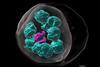
NewsMalaria: Newly identified ‘crown’ stage controls parasite reproduction
Researchers studying Plasmodium falciparum have found that the parasite relies on a brief but essential stage, nicknamed the “Crown” stage, to make sure a crucial internal structure is passed on correctly when it divides.
-
 News
NewsA rapid evolutionary process provides Sudanese Copts with resistance to malaria
An international study investigating the genomic diversity of the Sudanese population reveals that the Copts originating in Egypt –who settled in the country between the seventh and eleventh centuries– have acquired a genetic variant that protects them from contracting malaria.
-
 News
NewsSynthetic compound has the potential to treat malaria and prevent its transmission
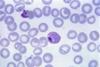
Tests on cell cultures and rodents have shown that the new molecule acts on all three stages of the disease cycle, eliminating the parasite from human blood and liver and preventing transmission to mosquitoes.
-
 News
NewsA rapid test using a mobile phone will be able to identify the most severe cases of imported malaria within minutes
A new malaria tool uses a mobile phone to combine rapid diagnostic tests with video analysis and is capable not only of detecting the infection in under six minutes but also of predicting which patients may develop severe forms of malaria.