
All LMU Munich articles
-
 News
NewsRoasted and browned: how gut bacteria break down heated foods
Heating food generates new dietary compounds. A study shows that an enzyme in gut bacteria can expand its functional repertoire to process them.
-
 News
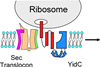
NewsScientists probe how proteins are inserted into cell membranes
Researchers looking at the cell membrane investigate how the proteins manufactured by the ribosomes in the cell interior reach their position within the membrane in the correct form and when the processes became established over the course of evolution.
-
 News
NewsTwin study detects gut bacteria that play a role in development of multiple sclerosis
Researchers examined stool samples from 81 pairs of twins, and compared their composition between siblings. They identified 51 taxa—groups of microorganisms—that differed in abundance between twins with and without MS symptoms.
-
 News
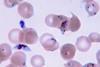
NewsPromising new class of antimalarial drugs discovered
A new study identifies an inhibitor of gene regulation that specifically kills the malaria pathogen. The chromatin remodeler PfSnf2L is a key regulator of genes that play an important role in various stages of the pathogen’s development.
-
 News
NewsResearchers win major European funding to investigate biological clocks in bacteria
A pioneering collaboration investigating the intricacies of biological clocks in bacteria has been awarded prestigious European Research Council (ERC) funding. Source: Ella Baker & Jack Dorling, John Innes Centre A pioneering collaboration will investigate the intricacies of biological clocks in bacteria The John Innes Centre, LMU Munich ...
-
 News
NewsAncient DNA reveals how a chicken virus evolved to become more deadly
Scientists have used ancient DNA to trace the evolution of Marek’s Disease Virus (MDV), showing how viruses evolve to become more virulent and could lead to the development of better ways to treat viral infections.