
All articles by Linda Stewart – Page 135
-
 News
NewsScientists develop safer and more sustainable antimicrobials to prevent infection of cow udders
A new study has unveiled an alternative class of potent antimicrobial compounds that could be used in the agriculture industry to combat multi-drug-resistant bacteria that cause bovine mastitis.
-
 News
NewsExpanding the genetic toolkit: nitrogen-response promoters developed for Bacillus licheniformis
Promoters are crucial expression elements in synthetic biology, and Bacillus licheniformis serves as an excellent chassis cell for industrial production, but is restricted by a lack of nitrogen source-responsive promoters.
-
 News
NewsMolecular bodyguard helps infections persist
Researchers have identified a key molecular player that helps bacteria survive the hostile environment inside the body. Their study reveals how the protein RfaH acts as a protective shield for bacterial genes — and points to new strategies for fighting persistent infections.
-
 News
NewsEarth’s oxygen boom: a fresh perspective for a billion-year-old problem
A new study examines nickel and urea in early microbial habitats, showing how ancient cyanobacteria adapted to their chemical surroundings. By recreating Archean conditions in the lab, researchers uncovered clues about the delicate balances that shaped early cyanobacterial life.
-
 News
NewsHow microbial strain variations influence neurobehavior
Microbial single nucleotide variations influence host cognitive behavior by regulating metabolism, a new study of merino sheep reveals.
-
 News
NewsResearchers map correlations between gene variants and proteomes
Scientists have discovered a way to predict the effects of numerous mutations in yeast - a valuable tool for better understanding molecular mechanisms. Key to this discovery was a detailed analysis of the proteome – the collection of all proteins inside a cell.
-
 News
NewsFrom glucose to gourmet: engineered bacteria churn out key food additive
Researchers used E. coli as the chassis to produce inosinic acid (IMP), a popular umami enhancer. By reprogramming the metabolic flux network of E. coli and introducing amino acid mutations in the key enzymes in the synthesis pathway, the yield was significantly increased.
-
 News
NewsStudy finds HEPA purifiers alone may not be enough to reduce viral exposure in schools
In a secondary analysis of a study of 200 classrooms, researchers found respiratory viral exposures were still high in those with HEPA purifiers, suggesting additional interventions are needed.
-
 News
NewsPoultry growers: Have you checked your water lines lately?
Water quality could impact the kind of microbial populations in poultry drinking water lines and lead to the buildup of a biofilm that can harbor pathogenic bacteria like Salmonella, according to a new study.
-
 News
NewsTiny architects, titanic climate impact: scientists call for coccolithophores to get their own day
Five European research organisations have launched an initiative to make 10 October International Coccolithophore Day, highlighting their crucial role in regulating the planet’s carbon balance, producing oxygen, and sustaining the ocean ecosystems that underpin all life.
-
 News
NewsProtein condensates determine a cell’s fate, yeast study reveals
To ensure they have all the information they need, molecules from throughout a cell gather and form aggregates that can have different consistencies: regions called “condensates”. Researchers have discovered how condensates contribute to cellular information exchange in yeast cells.
-
 News
NewsResearchers uncover hidden plant–microbe strategy that boosts crop growth under nutrient stress
Scientists discovered that when soil microbes compete with each other in the rhizosphere, they release a well-known compound called glutathione. This compound enhances plant growth under sulphur-deficient conditions.
-
 News
NewsChemobiological platform enables renewable conversion of sugars into core aromatic hydrocarbons of petroleum
Researchers have developed a chemobiological platform that converts renewable carbon sources such as glucose and glycerol into oxygenated precursors, which are deoxygenated in the same solvent system to yield benzene, toluene, ethylbenzene, and p-xylene (BTEX).
-
 News
NewsBiochar and plants join forces to clean up polluted soils and boost ecosystem recovery
A review explores how combining biochar with rhizoremediation, a nature-based process that uses plant roots and beneficial microbes to break down pollutants, can greatly enhance soil restoration. Biochar acts as both a catalyst and a habitat for microbes.
-
 News
NewsInspection confirmed mould damage in schools does not increase students’ risk of developing asthma
A recent study found that mould damage in school buildings does not increase the risk of asthma among students. The study included 110 Finnish primary and secondary schools, and the health of 30,000 students was tracked using national health registers over a 16-year period.
-
 News
NewsMore than a feeling: Could a healthier gut improve mental health?
A new review finds strong causal evidence that gut microbes can change brain chemistry, stress responses and behaviours in animal models; and evidence that probiotics, diet changes, and faecal microbiota transplants improve mood and anxiety.
-
 News
NewsNew global burden of disease study: Mortality declines, youth deaths rise, widening health inequities
The world faces an emerging crisis of higher death rates in adolescents and young adults in North America and Latin America due to suicide and drug and alcohol consumption, and in sub-Saharan Africa due to infectious diseases and unintentional injuries.
-
 News
NewsParasite paparazzi take millions of photos of secret malaria proteins
Using millions of microscope images magnified up to 130,000 times, researchers have unraveled the structure of two key proteins in the malaria parasite. With this knowledge, scientists are developing new vaccines that block the transmission of parasites via mosquitoes.
-
 News
NewsRare bacterium ‘plays dead’ to evade detection in NASA clean rooms
A rare novel bacterium found in an unexpected environment may be evading detection by “playing dead”. Discovered in NASA spacecraft assembly clean rooms, Tersicoccus phoenicis could have major implications for planetary protection and clean room sterilization practices.
-
 News
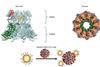
NewsProtein nanorings designed to detect and neutralize SARS-CoV2 virus
Scientists have generated a new ring-shaped protein nanomaterial capable of strongly binding to and neutralising the SARS-CoV2 virus. The new nanomaterial is formed by a scaffold based on recombinant ring-like proteins (RLPs), to which mini proteins were incorporated.