
All chickenpox articles
-
 News
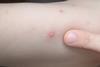
NewsVaricella zoster virus can cause serious disease beyond chickenpox and shingles
New research is shedding light on the surprisingly broad range of neurological and systemic diseases that can be caused by varicella zoster virus (VZV), the virus that causes chickenpox and shingles.
-
 News
NewsCould preventing shingles also help prevent dementia?
A new study finds that older adults who received a shingles vaccine had a 24% lower risk of developing dementia over four years. The findings add to growing evidence that preventing shingles may also protect against neurological disease.
-
 News
NewsStudy helps understand pain associated with viral infection
Through experiments in mice infected with a herpes virus, scientists have identified an immune system sensor that recognizes viral fragments and activates neurons responsible for pain, independently of inflammation.
-
 News
NewsViral messaging can deliver lessons on how infectious diseases spread
A new study explores a hybrid approach to understanding social networks that involves inferring not just social contacts but also the rules that govern how contagion and information spread.
-
 News
NewsStudy finds shingles increased risk of subsequent cognitive decline
A new study has found that an episode of shingles is associated with about a 20 per cent higher long-term risk of subjective cognitive decline, providing support for getting the shingles vaccine to decrease risk of developing shingles.
-
 News
NewsScientists identify key protein behind spread of shingles virus
Scientists have discovered a new evasion strategy used by the varicella zoster virus, which causes chickenpox and shingles, that may allow it to affect tissues far from the original site of infection.
-
 Opinion
Has a viral contribution to Alzheimer’s disease been in front of our noses this whole time?
The concept that a viral infection may induce pathology in regions far from its active location is gaining traction. Could this phenomenon also be at play in Alzheimer’s disease?
-
 News
NewsAlgorithm boosts Covid vaccine response 128-fold
Researchers have developed an AI algorithm that can rapidly design highly stable COVID-19 mRNA vaccine sequences that were previously unattainable, achieving a 128-fold increase in the vaccine’s antibody response.